

Best Designer Brands That Hold Value: 2026 Resale Guide
Table of Contents
- Why Some Designer Bags Keep Their Value
- Best Designer Brands That Hold Value in 2026
- Best Luxury Bags for Resale: What the Secondary Market Rewards
- Maintaining Designer Handbag Condition for Long-Term Value
- Luxury Handbag Investment Guide: Economic Indicators and Regional Demand
- Common Mistakes That Erode Resale Value
- Frequently Asked Questions
Last Updated: September 10, 2026
Why Some Designer Bags Keep Their Value
The best designer brands that hold value share three traits: controlled supply, durable materials, and a design language that outlasts trends. To The Nines curates handbags with exactly these qualities, because resale strength starts the day you buy, not the day you sell.
Resale value is the price a bag commands on the secondary market relative to its original retail price. A bag that holds value resists depreciation; a bag that appreciates becomes a genuine investment piece. Most designer bags lose value the moment they leave the boutique (peer-reviewed research). A select group does not.
Resale Value Factors: Scarcity, Condition, and Provenance
Scarcity, condition, and provenance decide nearly everything. A limited edition run of a few hundred pieces creates scarcity. A bag kept in its dust bag with its authenticity card intact protects condition and provenance at once. Buyers on the secondary market pay premiums for all three, and they walk away from bags missing any one of them.
Investment pieces vs. Seasonal Trends
Investment pieces are permanent collection styles: the quilted crossbody, the structured top-handle, the monogram shoulder bag. Seasonal collections rotate every few months, and their resale prices usually fall once the season ends. Buyers chasing retention rate should ignore the runway and follow the permanent line.
Best Designer Brands That Hold Value in 2026
These are the designer brands that hold value best in 2026, based on permanent-collection demand, material quality, and secondary market liquidity.
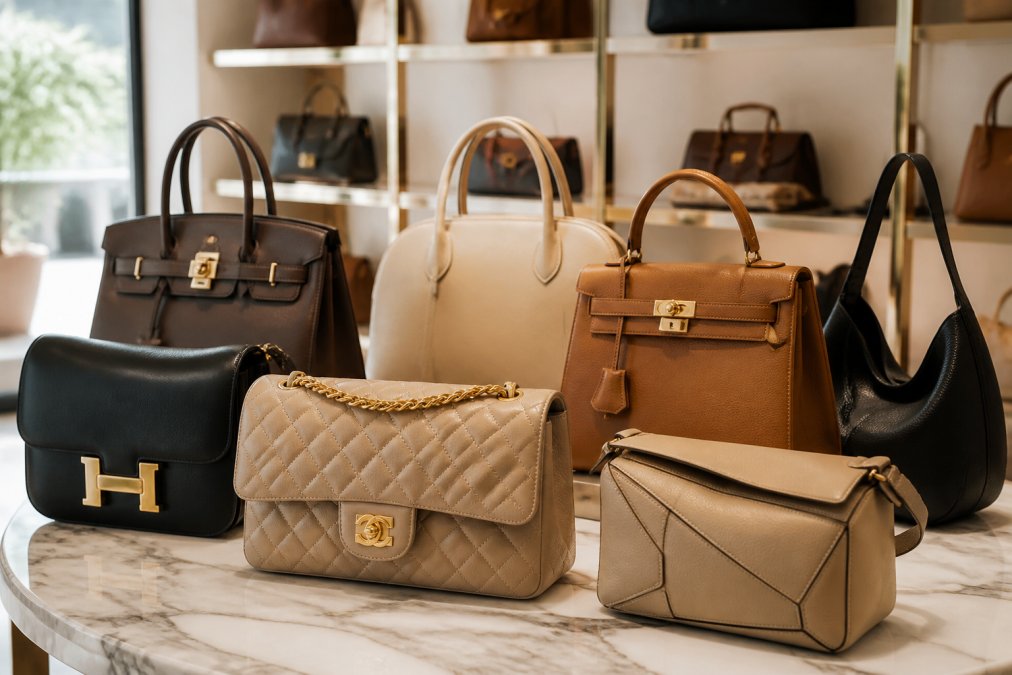
| Brand | Signature Style | Material | Resale Strength |
|---|---|---|---|
| Gucci | GG Marmont, Ophidia | Matelassé calfskin, coated canvas | Strong on permanent lines |
| Givenchy | Antigona | Calf leather | Steady, collector-driven |
| Saint Laurent | Gaby | Lamb leather | Strong, timeless design |
| Ferragamo | Gabry | Hammered calfskin | Rising, craftsmanship-led |
| Dolce & Gabbana | Micro Sicily | Calf leather | Niche but resilient |
| Valentino Garavani | Rockstud | Calf leather | Icon-driven demand |
| Prada | Small leather goods | Calf leather | High retention rate |
Gucci: The GG Marmont and Ophidia Lines
Gucci's GG Marmont and Ophidia lines anchor the brand's resale strength. The chevron matelassé calfskin and the Double G hardware read as instantly recognizable without chasing a season. The Gucci GG Marmont shoulder bag in black calfskin, priced at $1,183.17 at To The Nines, is the exact silhouette that buyers search for by name. The Ophidia's monogrammed coated fabric, at $761.08, holds value for a different reason: the GG Supreme pattern has stayed in production for decades, so demand never fully disappears.
Givenchy: Antigona and Timeless Calfskin
The Antigona is Givenchy's value anchor. Its pentagonal appliqué and structured calf leather body have changed little since launch, which is precisely why the secondary market trusts it. The Antigona Mini at $1,384.96 carries leather top handles and a removable chain, so it works as both a handbag and a shoulder bag. Givenchy's plainer calfskin handbags, like the $868.09 style in the collection, appeal to buyers who want the craftsmanship without a logo doing the talking.
Saint Laurent: The Gaby Crossbody
Saint Laurent's Gaby crossbody is one of the most liquid bags in this group. Quilted lamb leather, a front logo appliqué, and an adjustable strap make it a daily-wear piece, and daily-wear pieces generate constant secondary demand. The black lamb leather Gaby at $1,260.96 is made in Italy, and the "made in Italy" stamp matters to resale buyers who use it as a first-pass authentication signal.
Ferragamo: The Gabry Mini Shoulder Bag
Ferragamo is the quiet performer on this list. The Gabry mini, at $905.42, uses hammered calf leather and the gold Doppio Gancini logo, a house code that predates most of the brands above. Collector interest in Ferragamo has grown as buyers look past pure logo recognition toward craftsmanship. That shift favors Ferragamo more than almost any other house.
Dolce & Gabbana: Micro Sicily
The Micro Sicily, at $1,098.23, is a niche pick with a loyal following. Its single rigid top handle and magnetic flap closure give it a formal, structured look that photographs well, and photographability drives collector interest online. Resale demand is narrower than Gucci's, but the buyers who want a Sicily want it specifically, which keeps prices stable.
Valentino Garavani: Rockstud Shopping Mini
Valentino's Rockstud line has kept its identity for over a decade, and that consistency is the whole resale argument. The garnet calfskin Shopping mini at $1,328.70 carries platinum-finish studs, top handles, and a removable chain. Rockstud pieces sell quickly because the design is instantly identifiable, a quality that supports both scarcity perception and collector interest.
Prada: Calfskin Wallets and Small Leather Goods
Small leather goods deserve a place in any luxury handbag investment guide. Prada's calfskin wallets, at $404.56 and $866.90, cost far less than a bag but retain value well because they wear out and get replaced. A wallet with the triangle logo and full leather lining keeps its desirability even after years of use, which is rare in this category.

Best Luxury Bags for Resale: What the Secondary Market Rewards
The best luxury bags for resale are black or neutral calfskin pieces from permanent collections, sold with original packaging. The secondary market rewards predictability above all: a buyer wants to know exactly what arrives.
Condition reports drive final prices more than brand name alone. A bag rated "excellent" with light corner wear can sell for noticeably more than the same model rated "good." Authentication matters just as much, and buyers increasingly rely on authentication guidance from the Federal Trade Commission when judging whether a listing is trustworthy.
The Hidden Costs of Resale
Most sellers forget the costs that eat into proceeds. Consignment platforms take a commission, authentication services charge a fee, shipping and insurance come out of your pocket, and a buy-back program may offer convenience at a lower payout. Add cleaning or repair before listing, and the gap between the sale price and what you keep can be substantial. Factor these in before you assume a bag "made money."
Maintaining Designer Handbag Condition for Long-Term Value
Maintaining designer handbag condition is the single most controllable factor in resale value. Two identical bags bought the same day can differ significantly in resale price two years later, purely because of storage and handling. Over a 5-10 year hold, the difference compounds: leather that is fed and rotated ages into a patina buyers pay for, while leather that is starved, sun-bleached, or crushed ages into a discount.
Storage Protocols and Original Packaging
Store bags stuffed, upright, and inside their dust bag. The stuffing matters more than most owners realize: an unstuffed bag collapses along its fold lines, and those creases become permanent in structured calfskin within a season. Use acid-free tissue or a clean pillowcase rather than newspaper, which can transfer ink.

- Stuff the bag to hold its shape, structured bags need firm support, slouchy bags need light fill
- Place it in the dust bag, never a sealed plastic bin, leather needs to breathe, and sealed plastic traps moisture that breeds mildew
- Store the authenticity card and serial number with the bag
- Keep it away from direct sunlight and radiators, UV fades dye and dries leather, and heat near a radiator can crack a coated canvas finish
- Rotate bags so no single piece carries daily wear
- Hang nothing by its strap for months at a time, the leather stretches and never fully recovers
Humidity and climate. Leather is hygroscopic: it absorbs and releases moisture from the air. In humid climates, store bags in a breathable dust bag in a closet with airflow, and consider a silica packet changed seasonally. In dry climates, the opposite problem applies, leather can dry and crack, so a light conditioning every few months helps. Coated canvas resists humidity far better than smooth leather, which is why the Gucci Ophidia line tolerates a daily commute with less maintenance than a lambskin bag.
Hardware care. Gold-tone and platinum-finish hardware tarnishes with skin oils and humidity. Wipe hardware with a soft dry cloth after wear rather than polishing aggressively, which can strip the finish. Scratched hardware is one of the first things an authentication and condition reviewer notes, and it is nearly impossible to reverse.
Leather-type trade-offs. Lambskin (as on the Saint Laurent Gaby) is softer and more prone to scratching than calfskin, so it rewards careful rotation. Hammered calfskin (as on the Ferragamo Gabry) hides minor surface wear better than smooth calfskin. Matelassé quilting (as on the Gucci GG Marmont) can flatten at pressure points if the bag is stored under weight. Knowing your leather type tells you which risk to manage.
Authentication and Condition Reports
Request or produce a condition report before any sale. Note corner wear, hardware scratches, interior staining, and strap condition in plain language, and photograph each in consistent lighting. A buyer who can see the flaw up front is far less likely to dispute the sale later.
Authentication should rely on multiple signals: the serial number, stitching density, hardware weight, and the authenticity card. A single detail proves nothing; the pattern across all of them does. The Federal Trade Commission publishes consumer guidance on counterfeit goods and on how to report them, which is a useful reference when a listing's authenticity is in question. For high-value pieces, a paid third-party authentication is cheap insurance against a costly mistake.
Luxury Handbag Investment Guide: Economic Indicators and Regional Demand
A luxury handbag investment guide has to account for the economy, not just the bag. Luxury spending tightens when disposable income falls, and secondary market prices follow within a season or two. When the economy strengthens, demand for pre-owned luxury goods rises first at the accessible end, which is why small leather goods and mini bags recover faster than statement pieces.

Regional demand shifts matter too. A silhouette that sells instantly in one market can sit for months in another, so sellers who list nationally rather than locally see faster turnover. Market volatility hits seasonal collections hardest and permanent collections least, which is the strongest argument for buying timeless design over trend pieces.
Common Mistakes That Erode Resale Value
The most common mistake is buying a seasonal collection bag and expecting it to behave like an investment piece. Seasonal pieces depreciate as soon as the next collection lands.
- Discarding the dust bag, box, or authenticity card
- Storing bags in humid closets or sealed plastic
- Over-cleaning leather with harsh products that strip the finish
- Ignoring small scuffs until they become permanent
- Selling during a demand dip instead of waiting for the market to recover
- Assuming a high retail price guarantees high resale value
Each of these mistakes is avoidable, and together they account for most of the value lost between purchase and sale.
Resale value rewards patience, storage discipline, and buying the right silhouette the first time. To The Nines makes that first decision easier with a curated collection of authentic designer handbags, backed by an authenticity guarantee and complimentary shipping on all U.S. orders. Every piece is chosen for the qualities resale buyers pay for: durable calfskin and lamb leather, permanent-collection designs, and the kind of craftsmanship that lasts for years rather than seasons. Shop the Collection at To The Nines and start with a bag built to hold its value.
Frequently Asked Questions
Which designer brands are worth investing in?
Brands with consistent resale demand include Gucci, Givenchy, Saint Laurent, Ferragamo, Dolce & Gabbana, Valentino Garavani, and Prada. Their classic styles retain value because of strong craftsmanship, material quality, and collector interest. Focus on timeless designs rather than seasonal collections, and always keep original packaging and authenticity cards to support resale value.
Do luxury handbags actually appreciate in value over time?
Some limited edition pieces appreciate, but most pre-owned luxury bags depreciate initially and then stabilize. The best designer brands that hold value tend to be those with controlled scarcity and enduring demand. Proper maintenance, including storing bags in dust bags and avoiding direct sunlight, helps preserve condition and resale value over years.
What factors determine the resale value of a designer bag?
Key factors include brand reputation, scarcity, condition, provenance, and whether the bag is a classic or seasonal style. Original packaging, dust bag, authenticity card, and serial number all boost resale value. Market demand and current retail price also influence how well a bag holds value on the secondary market.
How do I maintain my designer bags to ensure they hold their value?
Maintaining designer handbag condition means storing bags upright in their dust bag, away from heat and humidity. Clean leather with a soft cloth and avoid overstuffing. Keep the authenticity card and original packaging. For best luxury bags for resale, regular conditioning and prompt repair of minor damage protect both appearance and value.
Are classic styles better for investment than seasonal trends?
Yes, classic styles generally hold value better than seasonal trends because they appeal to a wider audience over time. Timeless designs from Gucci, Givenchy, and Saint Laurent have stronger retention rates. Seasonal pieces may see short-term spikes but often depreciate faster. A luxury handbag investment guide should always prioritize timeless design over fleeting trends.